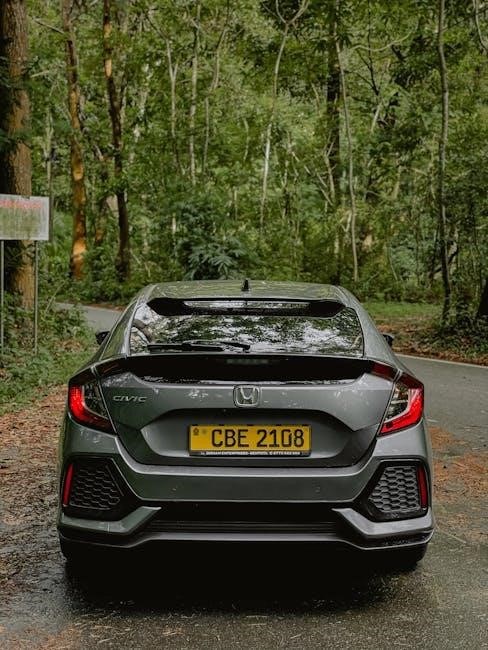
Honda Civic 2018 Manual: A Comprehensive Guide
This guide delves into the 2018 Honda Civic with a manual transmission, exploring its features, performance, and ownership experience.
It covers everything from technical specifications to maintenance, assisting both current and prospective owners.
The 2018 Civic offered a compelling blend of efficiency and driver engagement, particularly with the six-speed manual option.
This resource will help you understand the nuances of this popular vehicle, including its availability in various trims and configurations.
Information regarding the Honda Civic Type R, with its manual gearbox, is also relevant, alongside details on other Honda models like the HR-V and Jazz.
The 2018 Honda Civic manual represents a sweet spot for driving enthusiasts, offering a direct connection to the road often missing in modern vehicles. This model year continued the Civic’s reputation for reliability and fuel efficiency, while the available six-speed manual transmission provided a more engaging driving experience. The Civic lineup in 2018 included various trims, each potentially offering the manual option, catering to a broad range of buyers.
This introduction sets the stage for a comprehensive exploration of the 2018 Civic manual, drawing upon information regarding Honda’s broader transmission offerings – including CVT and automatic options – to highlight the unique appeal of the manual. Discussions surrounding models like the Honda Jazz and HR-V, while distinct, underscore Honda’s commitment to diverse powertrain choices. The availability of the manual in performance-oriented versions, such as the Civic Type R, further emphasizes its significance. Understanding the market context, including used car pricing and inspection points, is crucial for prospective buyers, as evidenced by recent sales listings and forum discussions.
Overview of the 2018 Honda Civic Lineup
The 2018 Honda Civic presented a diverse range of models, encompassing sedan, coupe, and hatchback body styles, each with varying trim levels. These included the LX, EX, EX-T, Sport, and Touring, with the manual transmission primarily offered on the LX, Sport, and EX trims. The high-performance Civic Type R exclusively featured a manual gearbox, catering to enthusiasts seeking maximum control. While the continuously variable transmission (CVT) was prevalent across the lineup, the manual option provided a distinct driving experience.
Understanding the broader Honda family, including models like the HR-V and Jazz, reveals Honda’s commitment to offering diverse options. Discussions on forums highlight the appeal of specific features across models, like Android Auto compatibility. The 2018 Civic’s market position was strong, with used examples frequently available, as indicated by recent sales data. Examining the full lineup helps contextualize the manual’s place within Honda’s overall strategy and appeal to different customer preferences.
Why Choose the Manual Transmission?
Opting for the 2018 Honda Civic’s manual transmission delivers a more engaging and connected driving experience. Drivers appreciate the direct control over gear selection, enhancing responsiveness and fostering a stronger sense of involvement. This contrasts with the convenience of the CVT, favored by some for its smoothness. The Civic Type R’s exclusive manual gearbox underscores this appeal for performance enthusiasts.
Beyond driving pleasure, a manual transmission can offer a lower initial purchase price compared to automatic variants. While fuel economy figures are comparable, the manual allows for greater driver control over engine braking and efficiency. Discussions within Honda forums often highlight the preference for manual transmissions among those valuing a traditional driving feel. Choosing manual also aligns with a desire for a simpler, potentially more reliable mechanical setup, avoiding the complexities of some automatic systems.

Technical Specifications of the 2018 Civic Manual
The 2018 Civic manual featured either a 2.0L or 1.5L turbo engine, paired with a precise six-speed manual transmission and front-wheel drive.
Engine Specifications: 2.0L and 1.5L Turbo
The 2018 Honda Civic Manual offered two distinct engine choices, catering to different driving preferences. The base engine was a 2.0-liter naturally aspirated inline-four, producing 158 horsepower and 138 lb-ft of torque. This engine prioritized reliability and smooth power delivery, making it ideal for daily commuting. For those seeking enhanced performance, a 1.5-liter turbocharged inline-four was available, generating 174 horsepower and 177 lb-ft of torque.
The turbo engine provided a noticeable boost in acceleration and responsiveness, thanks to its increased torque output. Both engines utilized Honda’s i-VTEC valve timing system, optimizing efficiency and power across the rev range. The 1.5L turbo also featured direct injection, further enhancing its performance characteristics. These engines were designed to work seamlessly with the six-speed manual transmission, offering a connected and engaging driving experience. The engines’ specifications contributed to the Civic’s reputation for fuel efficiency and dependability.
Transmission Details: 6-Speed Manual
The 2018 Honda Civic Manual featured a precise and engaging six-speed manual transmission, a key component for driving enthusiasts. This transmission was specifically tuned to complement both the 2.0-liter and 1.5-liter turbocharged engines, providing a direct connection between the driver and the powertrain. Gear ratios were carefully selected to optimize acceleration, fuel efficiency, and overall driving enjoyment.
The shift linkage was known for its short throws and positive feel, enhancing the driving experience. Honda engineers focused on minimizing friction and ensuring smooth gear changes. The manual transmission also contributed to the Civic’s sporty handling characteristics, allowing drivers to maintain greater control over the vehicle’s power delivery. It was available on select trims, appealing to those who preferred a more involved driving experience over the convenience of an automatic. This transmission was a standout feature for many Civic buyers.
Drivetrain and Performance Characteristics
The 2018 Honda Civic Manual employed a front-wheel-drive (FF) drivetrain, standard across all manual transmission models. This configuration contributes to the Civic’s balanced handling and efficient power delivery. Coupled with the 6-speed manual, the drivetrain offered a responsive and engaging driving experience. The final drive ratio of 4.810, as seen in some models, further optimized performance for both city and highway driving.
Performance varied slightly depending on the engine choice. The 2.0L engine provided a more linear powerband, while the 1.5L turbo offered increased torque for quicker acceleration. The manual transmission allowed drivers to fully exploit the engine’s capabilities, resulting in spirited performance. The Civic’s relatively lightweight construction also contributed to its nimble handling and overall driving dynamics, making it a fun and rewarding car to drive.
Fuel Economy Figures for the Manual Civic
The 2018 Honda Civic Manual delivered commendable fuel economy, balancing performance with efficiency. While specific figures varied based on engine choice and driving conditions, the manual transmission generally offered competitive results compared to automatic variants. The 2.0L engine typically achieved around 28 MPG city and 37 MPG highway, providing a solid balance for daily commuting and longer journeys.
The 1.5L turbocharged engine, despite its increased power, also demonstrated impressive fuel efficiency, often exceeding 31 MPG city and 40 MPG highway. These figures positioned the Civic as a practical and economical choice for drivers seeking a fun-to-drive vehicle without sacrificing fuel costs. Real-world mileage could fluctuate depending on driving style and maintenance, but the Civic consistently proved to be a fuel-conscious option within its class.

Driving Experience and Handling
The 2018 Civic Manual provides an engaging driving experience, characterized by precise shifting and responsive handling. It offers a direct connection to the road, enhancing driver control and enjoyment.
Shifting and Clutch Feel
The 2018 Honda Civic manual transmission is renowned for its smooth and precise shifting action; The six-speed gearbox offers clearly defined gates, making gear changes accurate and satisfying. The clutch pedal has a well-defined engagement point, providing good feedback and control for both daily commuting and spirited driving.
It isn’t overly heavy, reducing fatigue during extended periods behind the wheel, yet it’s substantial enough to inspire confidence. Drivers consistently praise the Civic’s manual for its ease of use, even for those relatively new to manual transmissions. The shift linkage feels solid and direct, contributing to a connected driving experience. This contrasts favorably with some competitors where the shift quality can feel vague or notchy.
The overall experience promotes a more involved and enjoyable driving style, allowing the driver to fully utilize the engine’s powerband.
Steering and Suspension Feedback
The 2018 Honda Civic manual delivers a responsive and engaging steering experience. While not overly weighted, the electric power steering provides decent feedback, allowing the driver to feel connected to the road. It’s precise and predictable, inspiring confidence when cornering. The steering ratio is well-tuned, offering a good balance between maneuverability at low speeds and stability at highway speeds.
The suspension setup complements the steering, providing a comfortable yet controlled ride. It effectively absorbs bumps and imperfections in the road surface, without feeling overly soft or wallowy. Body roll is well-contained during cornering, contributing to a secure and planted feel.
The Civic’s suspension strikes a good balance between comfort and handling, making it a pleasant car to drive on a variety of road surfaces.
Overall Driving Dynamics
The 2018 Honda Civic manual offers a genuinely enjoyable driving experience, particularly for enthusiasts who appreciate a connected feel. The six-speed manual transmission is a highlight, boasting a smooth and precise shift action. Clutch engagement is well-defined, making it easy to modulate and control. The engine, whether the 2.0L or 1.5L turbo, provides adequate power and responsiveness.
The Civic’s chassis is well-balanced, contributing to confident handling. Steering feedback, combined with the responsive suspension, inspires driver involvement. It’s a car that rewards a spirited driving style, yet remains comfortable and composed for everyday commuting.
Compared to automatic variants, the manual Civic feels more engaging and offers a greater sense of control, enhancing the overall driving pleasure.
Interior Features and Technology
The 2018 Civic manual’s cabin features a modern infotainment system, offering compatibility with smartphone integrations like Android Auto. Interior space is generous, complemented by essential safety technologies.
Infotainment System and Compatibility
The 2018 Honda Civic manual typically features a user-friendly infotainment system, varying slightly depending on the trim level. Base models often include a 5-inch color LCD screen, while higher trims boast a more advanced 7-inch touchscreen display. This larger screen provides access to features like Apple CarPlay and Android Auto, enabling seamless smartphone integration for navigation, music streaming, and hands-free calling.
Bluetooth connectivity is standard across the range, allowing for wireless audio streaming and phone calls. The system also incorporates USB ports for connecting external devices and charging. Higher-end trims may include additional features such as a premium audio system and integrated navigation. While the technology isn’t the most cutting-edge by today’s standards, it remains functional and relatively easy to use, providing a solid level of connectivity for drivers and passengers. The system’s responsiveness and interface are generally well-regarded.
Interior Comfort and Space
The 2018 Honda Civic, even in manual transmission guise, offers a surprisingly spacious and comfortable interior. Passenger room is generous for a compact car, providing ample headroom and legroom for both front and rear occupants. The Civic’s cabin design prioritizes practicality and ergonomics, with well-placed controls and a comfortable driving position.

Material quality is generally good for its class, with soft-touch surfaces in key areas. The seats are supportive and well-cushioned, making long journeys more comfortable. Cargo space is also commendable, particularly in the hatchback version, offering a versatile area for luggage or groceries. While not luxurious, the Civic’s interior strikes a good balance between comfort, practicality, and build quality, making it a pleasant place to spend time, even during spirited driving with the manual gearbox.
Safety Features and Driver-Assist Technologies
The 2018 Honda Civic manual prioritizes safety, incorporating a suite of standard and available driver-assist technologies. Honda Sensing, a comprehensive safety package, was widely available and included features like Collision Mitigation Braking System (CMBS), Lane Keeping Assist System (LKAS), and Adaptive Cruise Control (ACC). These systems enhance driver awareness and help mitigate potential accidents.
Additional safety features include Vehicle Stability Assist (VSA), Anti-lock Braking System (ABS), and multiple airbags throughout the cabin. The Civic consistently earned high safety ratings from organizations like the IIHS and NHTSA. While driver engagement is heightened with the manual transmission, these technologies provide an extra layer of security and peace of mind. The availability of features like ACC can be particularly useful on longer drives, complementing the manual driving experience.

Maintenance and Reliability
The 2018 Civic manual generally exhibits strong reliability, but routine maintenance is crucial. Common issues are minimal, and adhering to the recommended schedule ensures longevity and optimal performance.
Common Issues with the 2018 Civic Manual
While the 2018 Honda Civic manual is known for its reliability, some common issues have been reported by owners. These are generally minor and don’t detract significantly from the overall ownership experience. A recurring concern involves the clutch, with some drivers experiencing premature wear, particularly with frequent city driving. This is often linked to driving habits and clutch engagement.
Another reported issue relates to the shift linkage, occasionally exhibiting slight stiffness or imprecision, though this can often be addressed with proper adjustment. Some owners have also noted occasional issues with the infotainment system, specifically regarding Android Auto compatibility, though software updates frequently address these concerns.
Furthermore, a small number of vehicles have experienced minor electrical glitches, such as intermittent sensor warnings. Regular inspection and adherence to the recommended maintenance schedule can help mitigate these potential problems, ensuring a smooth and dependable driving experience with your 2018 Civic manual.
Recommended Maintenance Schedule
Maintaining your 2018 Honda Civic manual is crucial for longevity and performance. Honda recommends a standard maintenance schedule, beginning with oil changes every 7,500 to 10,000 miles, utilizing the specified oil type. Air filter replacement should occur every 15,000 to 30,000 miles, depending on driving conditions.
The engine coolant should be flushed and replaced every 30,000 miles, alongside brake fluid. Inspecting and potentially replacing spark plugs is advised around 60,000 miles. Critically, the manual transmission fluid requires inspection and potential replacement around 30,000 miles, ensuring smooth shifting.
Regular tire rotations (every 5,000-7,500 miles) and brake pad inspections are essential. Adhering to this schedule, alongside addressing any warning lights promptly, will contribute to the long-term reliability of your 2018 Civic manual and prevent costly repairs down the line.
Long-Term Reliability Expectations
The 2018 Honda Civic, particularly the manual transmission variant, generally enjoys a strong reputation for reliability. Honda consistently ranks well in dependability studies, and the Civic is no exception. However, proactive maintenance, as outlined previously, is paramount to sustaining this reliability over the long term.
Potential owners can reasonably expect a well-maintained 2018 Civic manual to surpass 150,000 – 200,000 miles with minimal major mechanical issues. Common concerns, though not widespread, can include wear on clutch components and potential sensor failures.
Regular inspections and timely repairs, coupled with adherence to the recommended maintenance schedule, will significantly mitigate these risks. The Civic’s robust engine and relatively simple manual transmission contribute to its overall durability, making it a dependable choice for years to come.
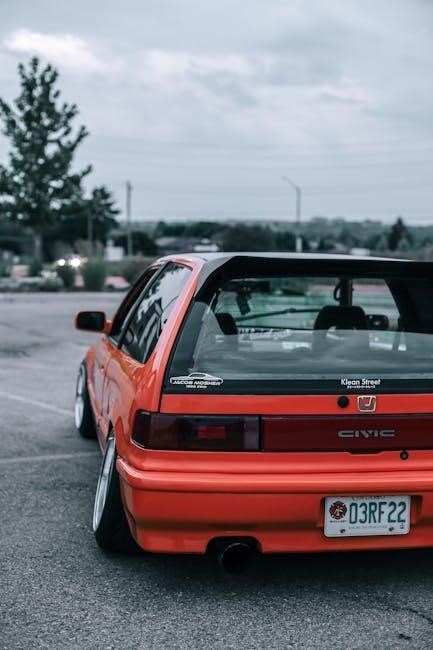
Buying a Used 2018 Honda Civic Manual
When purchasing a used 2018 Civic manual, thorough inspection is crucial, verifying accident history and original parts. Check vehicle history reports carefully for transparency.
What to Look for During Inspection
A pre-purchase inspection is paramount when considering a used 2018 Honda Civic with a manual transmission. Begin with a comprehensive visual assessment, checking for any signs of prior bodywork or damage, as noted in some listings. Verify that replaced parts, like bumpers, are indeed original Honda components. Examine the tires for even wear, indicating proper alignment and suspension health.
Crucially, inspect the clutch engagement and shifting smoothness during a test drive. Listen for any unusual noises from the transmission. Check the service history for documented maintenance, particularly regarding the clutch and gearbox. Scrutinize the interior for wear and tear consistent with the mileage.
Confirm the functionality of all electronic features, including the infotainment system and any driver-assist technologies. A vehicle history report is essential to uncover potential issues like accidents or title problems. Pay attention to the overall condition, as a well-maintained example will likely offer greater long-term reliability.
Typical Price Range and Market Value
Determining the fair market value for a 2018 Honda Civic with a manual transmission requires considering several factors. As of late 2025/early 2026, prices vary significantly based on mileage, condition, and location. Listings suggest a range, with examples appearing for sale in 2018 and subsequent years. Expect to find models ranging from approximately $15,000 to $22,000, though exceptionally well-maintained or low-mileage examples could command a premium.
The specific trim level (LX, EX, Sport, etc.) also influences the price. Comparing similar vehicles currently for sale in your area is crucial. Online valuation tools can provide a baseline estimate, but a professional appraisal is recommended for accuracy.
Remember that the Honda Civic consistently holds its value well, reflecting its reputation for reliability. Be prepared to negotiate, and factor in potential repair costs when assessing the overall value proposition.
Vehicle History Report Considerations
A comprehensive vehicle history report is paramount when evaluating a used 2018 Honda Civic with a manual transmission. These reports, obtainable through services like Carfax or AutoCheck, reveal crucial information about the vehicle’s past; Scrutinize the report for any recorded accidents, title issues (salvage, flood damage), or odometer discrepancies. Pay close attention to the number of previous owners, as this can indicate the level of care received.
Consistent maintenance records are a positive sign, demonstrating responsible ownership. Look for evidence of regular servicing, particularly related to the clutch and transmission.
Even if the report appears clean, it’s not a guarantee. Minor incidents may not be reported. Combining the report with a thorough physical inspection by a trusted mechanic is the best approach to ensure a sound purchase.
Comparisons with Automatic Transmission Models
The 2018 Civic manual offers a more engaging driving experience, but automatics provide convenience. Manuals typically have slightly better fuel economy and lower initial costs.
Manual vs. Automatic: Pros and Cons
Choosing between a manual and automatic 2018 Honda Civic involves weighing distinct advantages and disadvantages. The manual transmission empowers drivers with greater control over gear selection, resulting in a more connected and engaging driving experience – particularly appealing to enthusiasts. It often translates to marginally improved fuel efficiency and a potentially lower purchase price. However, mastering a manual requires skill and can be fatiguing in stop-and-go traffic.
Automatic transmissions prioritize convenience and ease of use. They simplify driving, especially in congested areas, and are generally more accessible to a wider range of drivers. Modern automatics, including the CVT found in many Civic models, offer smooth shifting and optimized fuel economy. Yet, they can sometimes feel less responsive than a manual and may carry a higher price tag. Ultimately, the best choice depends on individual driving preferences and needs.
Performance Differences
The 2018 Honda Civic manual exhibits distinct performance characteristics compared to its automatic counterparts. While both the 2.0L and 1.5L turbo engines deliver similar power outputs, the manual transmission allows for more direct control, potentially unlocking slightly quicker acceleration times with skilled driving. The six-speed manual fosters a more visceral connection to the engine, enhancing the sense of speed and responsiveness.
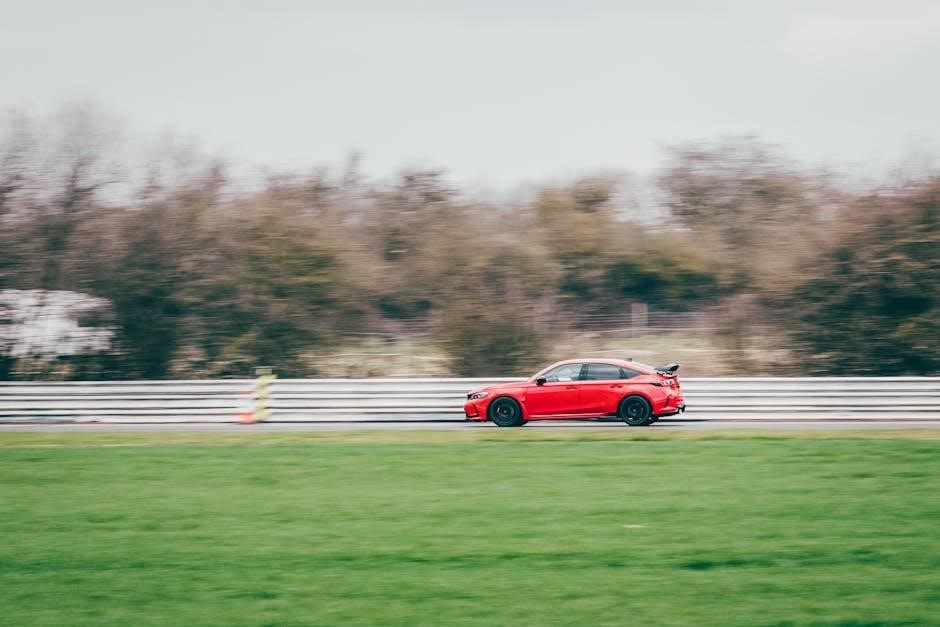
However, automatic transmissions, particularly CVTs, can sometimes achieve comparable or even superior acceleration due to their ability to maintain the engine in its optimal power band. The Civic Type R, a performance-focused model, exclusively offered a manual transmission, highlighting its appeal for driving purists. Ultimately, the perceived performance difference is often subjective and depends heavily on driver skill and preference. The manual provides a more engaging experience, while the automatic prioritizes seamless power delivery.
Cost Comparison
Generally, the 2018 Honda Civic with a manual transmission commanded a slightly lower initial price than models equipped with an automatic transmission or CVT. This price difference, though often modest, reflected the simpler manufacturing process of the manual gearbox. Currently, in the used car market (as of early 2026), this trend continues, with manual Civics typically listed for less than their automatic equivalents.
However, factors like mileage, condition, and trim level significantly influence the final price. Well-maintained, low-mileage manual Civics, especially the sporty Type R variant, can hold their value remarkably well. Considering long-term ownership, manual transmissions often incur lower repair costs due to their mechanical simplicity. The availability of aftermarket parts and the potential for DIY maintenance further contribute to cost savings. A 2018 model in excellent condition might range from $15,000 to $22,000, depending on these variables.
Modifications and Aftermarket Support
The 2018 Civic manual enjoys robust aftermarket support, offering diverse modifications for performance and aesthetics. Parts availability is excellent, enabling enthusiasts to personalize their vehicles.
Popular Modifications for the 2018 Civic
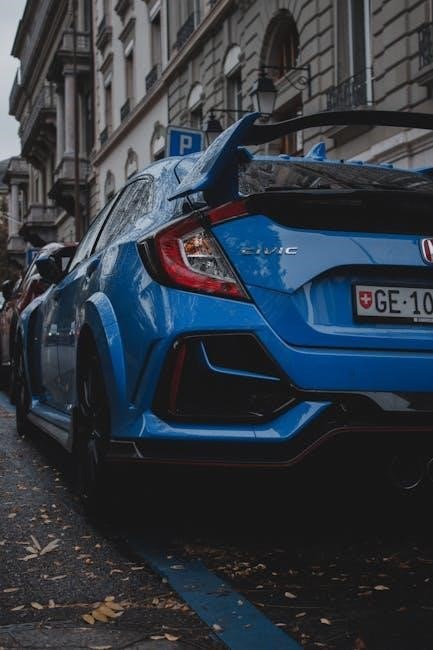
Numerous modifications enhance the 2018 Honda Civic manual’s performance and style. Performance exhaust systems are frequently upgraded, improving both sound and potentially horsepower gains. Suspension upgrades, including lowering springs or coilovers, dramatically improve handling and reduce body roll, creating a more engaging driving experience. Intake systems, offering increased airflow, are also popular choices.
Aesthetic modifications are equally prevalent. Many owners opt for aftermarket wheels, enhancing the car’s visual appeal and potentially reducing weight. Body kits and spoilers add a sporty look, while window tinting provides both privacy and a sleek appearance. Interior upgrades, such as shift knobs and pedals, personalize the cabin. For the Civic Type R, performance-focused modifications are particularly common, aiming to maximize track capabilities. Ultimately, the modification path depends on individual preferences and desired outcomes.
Aftermarket Parts Availability
The aftermarket support for the 2018 Honda Civic manual is exceptionally robust. A vast selection of parts is readily available from numerous suppliers, catering to diverse budgets and modification goals. Online retailers like Amazon, eBay, and specialized Honda performance websites offer extensive catalogs. Brick-and-mortar auto parts stores also carry a significant range of components, particularly for routine maintenance and common upgrades.
Parts range from simple bolt-on accessories to complex performance enhancements. Owners can easily find exhaust systems, intake kits, suspension components, and interior upgrades. The popularity of the Civic ensures a constant flow of new products and innovations. Specific parts for the Civic Type R, while often more expensive, are also widely accessible. Finding parts for the 2018 model is generally straightforward, ensuring owners can personalize and maintain their vehicles effectively.
Performance Enhancement Options
Numerous avenues exist to enhance the performance of the 2018 Honda Civic manual. For the 2.0L engine, bolt-on modifications like cold air intakes and cat-back exhaust systems offer modest gains in horsepower and responsiveness. The 1.5L turbo benefits from turbocharger upgrades and ECU tuning, unlocking significant power potential. Suspension upgrades, including lowering springs and adjustable coilovers, improve handling and reduce body roll.
Brake upgrades, such as performance pads and rotors, enhance stopping power, crucial for spirited driving. Lightweight wheels reduce unsprung weight, improving acceleration and handling. For serious enthusiasts, engine swaps and forced induction systems are viable, albeit more complex, options. The Civic Type R’s performance parts can sometimes be adapted, though compatibility requires careful consideration. Careful planning and professional installation are recommended for optimal results and reliability.